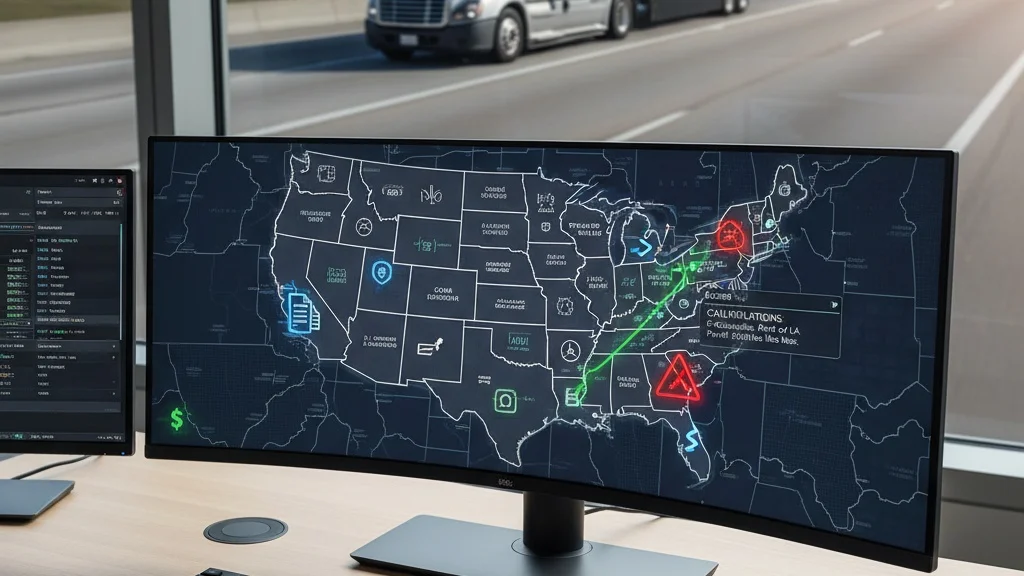
States and their importance
01/21/2024 - Updated
Understanding State-Specific Trucking Regulations
The United States trucking industry operates under a complex web of federal and state regulations. While federal law (FMCSA) provides baseline standards, each state has unique requirements, tax structures, permits, and operational challenges. For dispatchers and carriers, understanding state-specific regulations is not optional—it's essential for legal compliance and profitable operations.
Why States Matter in Trucking
Federal vs. State Authority
Federal Regulations (FMCSA/DOT):
- Hours of Service (HOS) - nationwide standard
- CDL requirements - federal standards
- Drug and alcohol testing - federal mandate
- Safety ratings - federal oversight
- Interstate commerce authority
- Fuel taxes (IFTA) - each state sets rates
- Weight limits - can be more restrictive than federal
- Permits - oversize, overweight, hazmat
- Registration and licensing fees
- Tolls and road use taxes
- Environmental regulations
- Winter requirements (chains, tire restrictions)
State Fuel Tax & IFTA
International Fuel Tax Agreement (IFTA)
What It Is: IFTA is an agreement among U.S. states and Canadian provinces to simplify fuel tax reporting for interstate carriers.
How It Works:
State Fuel Tax Rates (2024 Examples):
Highest Fuel Tax States:
- Pennsylvania: $0.577/gallon (diesel)
- California: $0.537/gallon (diesel) + environmental fees
- Indiana: $0.54/gallon (diesel)
- Illinois: $0.54/gallon (diesel)
- New Jersey: $0.494/gallon (diesel)
- Alaska: $0.095/gallon (diesel)
- Missouri: $0.17/gallon (diesel)
- Mississippi: $0.18/gallon (diesel)
- New Mexico: $0.187/gallon (diesel)
- Arizona: $0.19/gallon (diesel)
Strategic Fuel Buying:
The Math:
- Fill up in Missouri at $0.17/gal tax vs. Pennsylvania at $0.577/gal tax
- Savings: $0.407/gallon difference
- 150-gallon fill-up: $61 savings per tank!
- ✅ Plan fuel stops in low-tax states
- ✅ Fuel in MO, MS, NM, AZ when routing through
- ✅ Avoid fueling in CA, PA, IL, IN unless necessary
- ✅ Use fuel cards with network pricing
- ✅ Monitor fuel prices via apps (GasBuddy, TruckerPath)
- Quarterly deadlines: April 30, July 31, Oct 31, Jan 31
- Requires: Miles by state, gallons purchased by state
- Tools: TruckLogics, ProTransport, KeepTruckin for tracking
- Penalty for late filing: Significant fines + interest
Weight Limits by State
Federal Standard:
- Interstate highways: 80,000 lbs gross vehicle weight (GVW)
- Axle limits: 12,000 lbs (steer), 34,000 lbs (tandem)
State Variations:
States with HIGHER Limits (Specific Roads):
Michigan:
- 164,000 lbs on certain state roads
- Must use 11-axle configuration
- Special permits required
- Why: Manufacturing (automotive) industry lobbied for higher limits
- 100,000 lbs on designated roads
- Must have 6+ axles
- Forestry industry exception
- 105,500 lbs on certain highways
- Agricultural hauling exceptions
California:
- 80,000 lbs federal limit BUT
- Bridge Formula B strictly enforced (more restrictive spacing)
- Many state roads have lower limits (70K, 60K)
- CHP (California Highway Patrol) aggressive enforcement
- 80,000 lbs on interstates
- Non-interstate roads: Lower limits common
- Special axle spacing requirements
- 80,000 lbs federal limit
- Thruway restrictions on certain sections
- Strict bridge weight enforcement
Dispatcher Implications:
Before Booking a Load:
Overweight Permits:
- Cost: $15–$200+ per state
- Processing: Can take days (not instant)
- Routing restrictions: Must follow permitted route only
- Time limits: Permits often valid for specific dates/times
- Minor violation (1,000-2,000 lbs over): $100–$500 fine
- Serious violation (5,000+ lbs over): $1,000+ fine, out-of-service order
- Extreme violation: Criminal charges possible
Tolls by State
High-Toll States:
Pennsylvania:
- PA Turnpike: One of the most expensive in U.S.
- Cost: $300–$500+ for cross-state run (Pittsburgh to Philly)
- Why so high: Decades of deferred maintenance, bond debt
- Thruway: $100–$200+ depending on distance
- NYC bridges/tunnels: $75–$125+ per crossing
- GWB (George Washington Bridge): $102 cash (truck rate)
- NJ Turnpike: $200+ for full length
- Combined with NY tolls: $400–$600 for I-95 corridor
- I-90 Tollway (Chicago): $50–$100 depending on entry/exit
- Required for many Chicago routes
- Mass Pike: $50–$100 cross-state
- Boston tunnels: Additional fees
- I-95 corridor: $30–$50 (short but expensive)
- Turnpikes: $30–$60 depending on route
States with NO Tolls (or Limited):
Free Interstate Access:
- Arizona, Colorado, New Mexico, Montana, Wyoming
- Most of the Midwest (except IL around Chicago)
- Most of the Southeast (except FL Turnpike)
- Most of the West Coast (except some CA bridges)
Toll Collection Methods:
E-ZPass (Northeast):
- Covers: ME, NH, MA, RI, CT, NY, NJ, PA, DE, MD, VA, WV, NC, OH, IN, IL, KY
- Critical: Get E-ZPass for Northeast operations
- Discount: 20-40% off cash rates
- Video tolling: Without E-ZPass, mailed invoices at higher rates + fees
- FL Turnpike system
- Dallas, Houston toll roads
- Bay Area bridges, express lanes
Dispatcher Toll Strategy:
Calculate Toll Costs BEFORE Booking:
- ✅ NYC/NJ corridor: Add $400–$600 to cost
- ✅ PA cross-state: Add $300–$500
- ✅ I-95 Boston to DC: Add $600–$800 total
- Sometimes U.S. highways (non-interstate) save money despite longer distance
- Example: U.S. Route 30 (PA) vs. PA Turnpike
- Trade-off: Free but slower (more hours, more fuel)
- Don't accept a load that pays $2.00/mile if tolls eat $0.50/mile of profit
- Negotiate toll reimbursement with brokers on high-toll routes
State Permit Requirements
Oversize/Overweight Permits:
Every State Different:
California:
- Department: Caltrans
- Online portal: Available for most permits
- Processing: Instant to 10 business days
- Cost: $15–$100+ depending on size/weight
- Restrictions: May require weekend-only travel, daylight only
- Department: TxDMV
- Online system: TxDMV Oversize/Overweight portal
- Processing: Usually same-day for routine
- Cost: $60–$200+
- Flexible: Texas is generally "trucker-friendly"
- Department: NYSDOT
- Processing: Can take 5-10 business days
- Cost: $125–$500+
- Restrictions: Very strict routing requirements
- Winter: Additional restrictions Nov-Mar
- Department: FDOT
- Online system: Available
- Processing: 3-7 days typical
- Cost: $50–$200+
- Hurricane season: Restrictions May-Nov
Special Permits:
Hazmat Endorsement & Permits:
- Federal: Hazmat endorsement on CDL required
- State-specific: Additional permits for certain materials
- Route restrictions: Can't use certain tunnels/bridges
- Placarding: Must be proper and visible
California:
- R1: Chains required on drive axles
- R2: Chains on drive axle, chains on one other axle
- R3: Chains on all axles (rare, extreme conditions)
- Enforcement: CHP strictly enforces
- Penalty: $500+ fine, turned around
- Similar to California
- I-5 through Siskiyou Pass, I-84 through Blue Mountains
- Oct 1 - April 30: Must carry chains
- I-90 over Snoqualmie Pass
- Chains required signs posted
- Traction Law: Applies I-70 mountain corridor
- Commercial vehicles MUST have chains Sept 1 - May 31
- Penalty: $500-$1,000 fine + possible jail time
- Chain requirements on I-80, I-90 during storms
- Road closures common in winter
Dispatcher Winter Strategy:
High-Risk Mountain States (Nov-Mar):
- ❌ Avoid if possible: CO, WY, MT I-90, I-80 routes
- ✅ Route around: Use southern I-40, I-10 routes when feasible
- ✅ Experienced drivers only for winter mountain runs
- ✅ Monitor weather: Check road conditions before dispatch
- ✅ Verify chains: Ensure driver has proper chains for truck
- ✅ Allow extra time: Weather delays are common
State-Specific Regulations & Challenges
California - The Most Regulated State
CARB (California Air Resources Board):
- TRU (Transport Refrigeration Unit) regulations
- SmartWay certified carriers preferred by many CA shippers
- Truck & Bus Regulation:
Meal & Rest Break Rules:
- CA requires meal breaks for drivers (controversial, pre-empted by federal law for CMVs)
- Litigation ongoing, but dispatchers should be aware
- Aggressive inspections at weigh stations
- Level 1 inspections common
- Violations = CSA points, out-of-service orders
- ✅ Verify CARB compliance before booking CA loads
- ✅ Older equipment: May not be able to enter CA
- ✅ Expect delays at weigh stations
- ✅ Premium rates justified by compliance costs
New York - Complex Urban Operations
NYC Restrictions:
- Thruway: 65 mph speed limit for trucks (lower than cars)
- Parkways: NO COMMERCIAL TRUCKS (low bridges, residential roads)
- Manhattan: Delivery restrictions by time of day
- Weight restrictions: Many local roads prohibit trucks
- E-ZPass required for tolls (video billing is expensive)
- Heavy snow common Nov-Mar
- Road closures on Thruway during severe weather
- ✅ Avoid NYC unless premium rate ($3.00+/mile)
- ✅ Know delivery restrictions (many require night/early AM)
- ✅ Experienced drivers only for NYC
- ✅ Factor tolls ($100-$200) into costs
Illinois - High Taxes, Strategic Location
Positives:
- Chicago: Largest rail hub in U.S., massive freight market
- Central location: Gateway to Midwest
- Intermodal: Strong drayage market
- High fuel tax: $0.54/gallon
- Tollways: I-90, I-294, I-88 around Chicago = $50-$100
- Congestion: Chicago traffic delays common
- ✅ Chicago as hub for Midwest operations
- ✅ Fuel before entering IL (lower tax states)
- ✅ Factor tolls into rate negotiations
- ✅ Avoid rush hour if possible (3-7 PM weekdays)
Texas - Trucker-Friendly State
Positives:
- ✅ Pro-business: Generally trucker-friendly regulations
- ✅ No state income tax
- ✅ Reasonable fuel tax: Mid-range
- ✅ Major freight state: Oil/gas, manufacturing, agriculture
- ✅ Balanced market: Good inbound AND outbound freight
- Size: Long distances (El Paso to Houston = 750 miles)
- Summer heat: 100°F+ common, AC is essential
- Border region: Enhanced DOT inspections near Mexico
- ✅ Texas is a safe market - Easy to find loads
- ✅ Houston, Dallas, San Antonio, El Paso - All strong freight
- ✅ Cross-state runs - Good rates due to distance
- ✅ Use as hub for Southwest operations
Florida - See Markets Article
(Covered extensively in Markets article - avoid due to terrible outbound)
Arizona - Border & Desert Challenges
Positives:
- Phoenix: Winter produce (lettuce, melons)
- I-10 corridor: Major east-west route
- Lower fuel tax: $0.19/gallon
- Summer heat: 110-120°F, tire blowouts common
- I-10 inspections: Aggressive border enforcement (drug interdiction)
- Desert breakdowns: Dangerous, limited services
- ✅ Phoenix produce season (Dec-Apr) - good outbound
- ⚠️ Summer: Avoid if possible, extreme heat risk
- ✅ I-10 transit route - Good for CA-TX runs
- ✅ Border inspections: Allow extra time
Georgia - Southeast Hub
Positives:
- ✅ Atlanta: Major distribution hub
- ✅ Port of Savannah: 3rd largest U.S. port
- ✅ Manufacturing: Automotive (Kia), aerospace
- ✅ Crossroads: I-75, I-85, I-20 intersection
- Atlanta traffic: I-285 perimeter = parking lot during rush hour
- Weight enforcement: GA DOT scales are strict
- ✅ Atlanta as reload point from Florida
- ✅ Savannah port freight - Import containers
- ✅ Avoid I-285 during rush hour (6-9 AM, 3-7 PM)
- ✅ Safe market - Always freight available
State Inspection & Enforcement Patterns
Strictest Enforcement States:
California (CHP):
- Level 1 inspections common
- CARB compliance checked
- Weight strictly enforced
- CSA points add up fast
- I-70 mountain corridor heavily enforced
- Chain law violations = big fines
- Weigh stations strictly enforced
- Weigh stations on Thruway
- Overweight enforcement
- Speed enforcement (65 mph limit for trucks)
- Turnpike enforcement
- Weight and safety inspections
Moderate Enforcement:
Most Midwest states: Fair but consistent
Lighter Enforcement (Reputation):
Montana, Wyoming, Nevada: Lower population = fewer weigh stations
- Note: Still must comply, just less frequent stops
Registration & Apportioned Plates (IRP)
International Registration Plan (IRP):
What It Is: Allows commercial vehicles to travel in multiple states with one plate and registration.
How It Works:
Annual Renewal:
- Report actual miles traveled in each state
- Fees adjusted based on actual vs. estimated miles
- Choose state where carrier is based
- Some states have lower fees than others
- Can't change base state easily
State Registration Fees (Examples):
Expensive States:
- New York: $1,500–$3,000+ per truck
- California: $1,200–$2,500+ per truck
- Illinois: $1,000–$2,000+ per truck
- Montana: $500–$1,200 per truck
- Indiana: $800–$1,500 per truck
- Arizona: $600–$1,400 per truck
State-by-State Quick Reference
Best States for Carriers:
Texas:
- Pro-business, balanced freight, reasonable taxes
- ⭐⭐⭐⭐⭐ Excellent
- Southeast hub, strong freight, Atlanta distribution
- ⭐⭐⭐⭐⭐ Excellent
- Central location, manufacturing, moderate regulations
- ⭐⭐⭐⭐ Very Good
- Low fuel tax, I-10 corridor
- ⭐⭐⭐⭐ Good
Most Challenging States:
California:
- CARB, high fuel tax, congestion, strict enforcement
- ⭐⭐ Challenging (but necessary for freight)
- High tolls, complex routing, strict enforcement
- ⭐⭐ Challenging
- High fuel tax, Chicago tolls and congestion
- ⭐⭐⭐ Moderate
- Expensive turnpike, high fuel tax
- ⭐⭐⭐ Moderate
States to Understand Well:
Every dispatcher should have deep knowledge of:
Dispatcher's State Knowledge Checklist
Before Dispatching ANY Load:
Factor into Rate Negotiation:
- High-toll routes (add $0.30-$0.50/mile to rate)
- Permit-required loads (add $100-$500 for permits)
- California delivery (CARB compliance, delays)
- Winter mountain routes (risk, chains, delays)
State Resources for Dispatchers
Official State DOT Websites:
Road Conditions:
- 511 - Dial from any state for road conditions
- Each state DOT website - Real-time conditions, closures
- State DOT permit portals - Online applications
- State commercial vehicle enforcement divisions
Third-Party Tools:
Trucker Path:
- Real-time road conditions, weigh station status
- Parking availability
- Fuel prices by state
- Fuel optimizer (shows cheapest fuel states on route)
- Route planning with toll calculation
- Permit routing
- IFTA tracking and reporting
Conclusion
Understanding state-specific regulations, costs, and challenges is fundamental to profitable dispatching. The U.S. is not a uniform trucking market - it's 50 different markets with unique rules.
Key Takeaways:
Master These Concepts:
- ✅ Fuel tax strategy - Fill up in low-tax states (MO, MS, AZ)
- ✅ Toll calculation - Factor into rates (PA, NY, NJ, IL)
- ✅ Weight limits - Know state variations and bridge laws
- ✅ Permits - Plan ahead for oversize/overweight
- ✅ CARB compliance - Essential for California operations
- ✅ Winter requirements - Chains, tire laws, weather planning
- ✅ State enforcement patterns - Know where inspections are strict
- Good state knowledge = $5,000-$10,000+ more profit per truck annually
- Poor state knowledge = Fines, delays, rejected loads, lost money
- Study states on your regular lanes
- Learn from experienced dispatchers
- Track costs (fuel, tolls, permits) by state
- Stay updated on regulation changes
"A dispatcher who knows state regulations is worth their weight in gold. They save money, avoid problems, and keep trucks moving legally and profitably."
Continue Learning:
Master state regulations to master dispatching. Knowledge of state-specific requirements separates professional dispatchers from amateurs. Continue your education at Carriversity.
About The Carrier Info Team
Expert team at The Carrier Info, dedicated to providing comprehensive insights and best practices for the trucking and logistics industry.